 ultimate-guide
Custom Laser Engraving for Weddings: 2026 Guide
Table of Contents
- Why Couples Are Choosing Custom Laser Engraving for Weddings
- Popular Wedding Items for Laser Engraving
- Personalized Wedding Favors That Feel Bespoke
- Best Materials for Wedding Laser Engraving
- Understanding Laser Engraving Cost for Weddings
- Design File Requirements and the Proof Process
- What to Avoid Engraving and How to Care for Pieces
- Conclusion: Making Your Wedding Details Timeless
- Frequently Asked Questions
Last Updated: September 9, 2026
Why Couples Are Choosing Custom Laser Engraving for Weddings
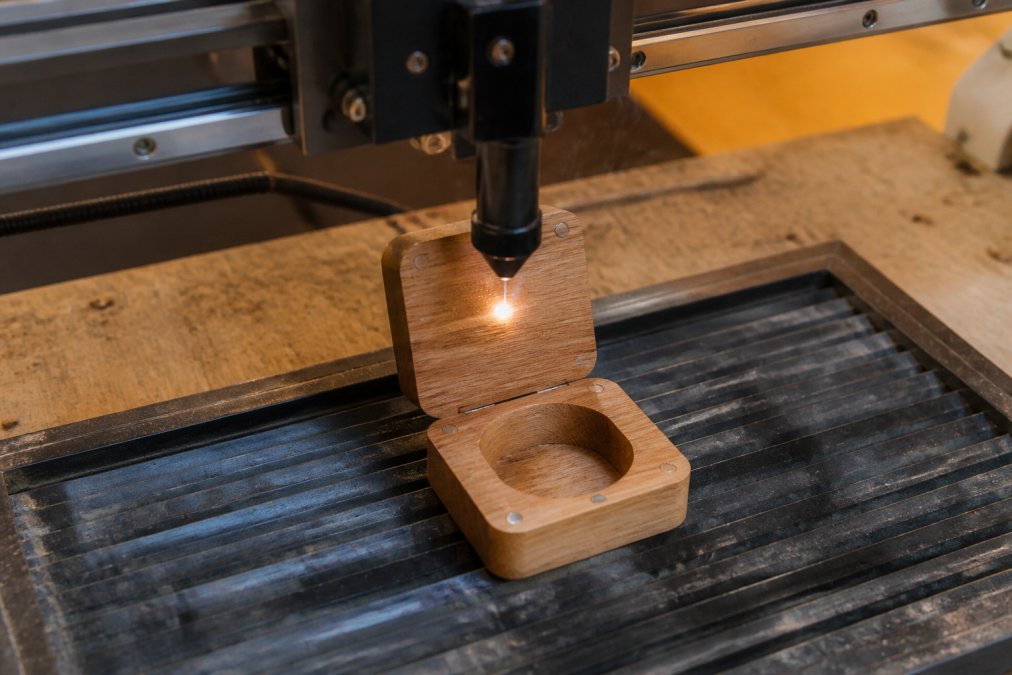
Custom laser engraving for weddings has moved from a niche add-on to a cornerstone of modern event design because it transforms ordinary objects into permanent, personal keepsakes. A laser beam vaporizes a thin layer of the material's surface, creating a precise, permanent marking that will not fade, chip, or peel like printed alternatives. This guide from Swift Creek Giftworks, a custom engraving studio based in Garner, NC, breaks down the process, materials, and costs so you can decide which pieces deserve this treatment and which are better left simple.
The appeal is not just aesthetic. Engraved items carry a tactile quality that printed favors lack. Guests keep a wooden ornament or an engraved flute long after the cake is gone, which means your design choices echo for years. The technical precision of laser engraving also allows for detail that hand-painting or vinyl application cannot match, from delicate typography to intricate monograms. Below, we will cover the most popular items couples engrave, the best materials for the job, and how to weigh the cost of professional service against the DIY route.
Popular Wedding Items for Laser Engraving
The range of engraveable wedding items is broad, but most requests fall into two categories: signage that guides and decorates, and favors that guests take home. The best pieces share a common trait: a flat or gently curved surface that gives the laser a consistent focal distance. Items with heavy texture or deep contours are difficult to mark cleanly without distortion.
Ceremony and Reception Signage
Signage remains the highest-impact use of laser engraving for weddings because it is both functional and photographed constantly. Custom engraved table numbers, seating charts, and welcome signs establish your typography and color story before guests even sit down. Acrylic and wood are the dominant materials here, with edge-lit acrylic offering a modern glow and wood grain lending a rustic warmth. For table numbers specifically, a laser-etched design on a sturdy base stands up to a full evening of handling and looks intentional in every photo.
Favors and Party Gifts
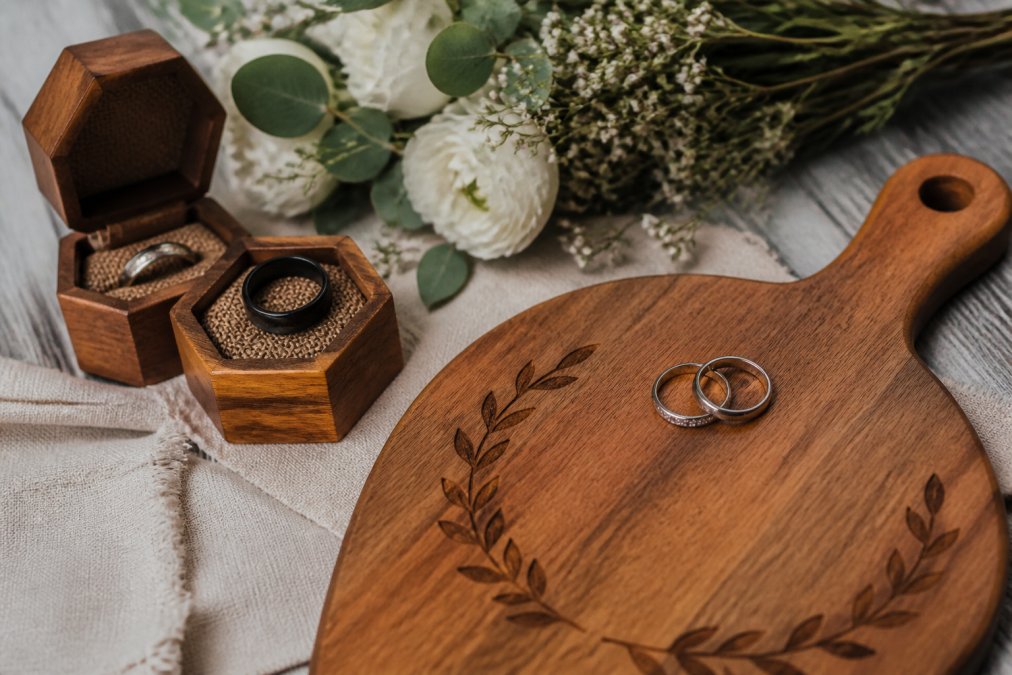
Favors are where personalization drives emotional connection. Engraved bottle openers, wooden coasters, and small cutting boards give guests a usable object stamped with your date and initials. Wedding party gifts, such as engraved flutes, ring boxes, or pocket knives, carry more sentiment because they are chosen for specific people. When ordering favors in bulk, consistency matters: a professional service ensures every piece matches the approved design proof, avoiding the slight misalignment that can occur with rushed production.
Personalized Wedding Favors That Feel Bespoke
Personalized wedding favors succeed when the engraving reflects the couple's story rather than just their names. A monogram is safe, but a custom illustration of your venue skyline, a favorite quote in a specific typeface, or coordinates of the ceremony site elevates the piece from generic to bespoke. The laser's ability to replicate fine lines means even complex artwork scales down cleanly onto a two-inch coaster or a small ornament.
Consider the guest experience when choosing a favor. A wooden ornament with a year and initial becomes a holiday tradition. An engraved glassware piece is used daily, keeping your wedding in the family kitchen. The most successful favors are those that fit naturally into a guest's life, not objects that sit in a drawer. If you are sourcing from a local studio, ask whether they offer design assistance; many couples arrive with only a rough idea and rely on the engraver to translate it into a vector graphic.
Best Materials for Wedding Laser Engraving
Choosing the right material is a balance of aesthetics, durability, and how the piece will be used. The table below summarizes the most common options, but the nuances matter more than the list.
| Material | Best For | Engraving Result | Durability & Care | Key Trade-off |
|---|---|---|---|---|
| Hardwood (Maple, Cherry, Walnut) | Signage, coasters, ring boxes | Crisp, high-contrast mark; darker on softer woods | Very durable. Clean with a dry cloth; condition with mineral oil every few months to prevent drying and cracking. | Wood grain adds character but can make fine details less uniform. |
| Bamboo | Favors, utensils | Light golden mark with a toasted edge | Durable but prone to water damage. Not dishwasher safe. | A sustainable choice, but the fibrous texture can blur very small text. |
| Acrylic | Signage, table numbers, cake toppers | Frosted white, high-contrast mark; can be edge-lit for a modern glow | Very durable. Clean with mild soap and water; avoid alcohol-based cleaners which can cause crazing (fine cracks). | Prone to scratching during transport; requires protective film. |
| Glass (Flutes, decanters) | Drinkware, keepsakes | Frosted, etched surface that catches the light | Dishwasher-safe, but hand washing preserves the etched detail. | High risk of thermal cracking during engraving; requires a skilled operator and a cool-down period. |
| Anodized Aluminum | Luggage tags, keychains, bottle openers | White or silver mark on a colored background | Extremely durable and weather-resistant. | Limited to flat or gently curved surfaces. |
The Hidden Issue: Material Sourcing and Coatings
The most common point of failure isn't the material itself, but its coating. Many mass-produced wood items are finished with a wax or lacquer that can melt or produce a gummy residue under the laser. Similarly, some acrylics are cast while others are extruded; cast acrylic engraves to a clean, frosty white, while extruded acrylic can melt and produce a less defined edge. A professional service will source materials specifically rated for laser engraving, which is a critical step you cannot replicate with a random craft-store purchase.
A Unique Angle: The Longevity Test
Most guides stop at aesthetics. The real question is: what will this look like in five years? Here is the practical difference:
- Wood: The engraving is a burn mark, so it is permanent. The risk is the wood itself drying out and cracking. A coat of mineral oil or a food-safe sealant immediately after engraving and again before the wedding will protect it.
- Acrylic: The engraved area is frosted and can collect dust and oils from hands, making it look dingy over time. A gentle wash with soapy water restores it, but never use a abrasive pad.
- Glass: The etch is permanent and will not fade, but it can become less visible if hard water stains build up. A quick wipe with a microfiber cloth and a dab of white vinegar keeps it clear.
Understanding Laser Engraving Cost for Weddings
Wedding laser engraving costs are not a single line item. They are a function of machine time, material, and setup. Here is a breakdown of how professionals think about pricing, so you can budget realistically and ask the right questions.
The Three Cost Drivers
-
Machine Time: This is the largest variable. A simple text-only engraving on a coaster might take 30 seconds. A detailed, edge-lit acrylic sign with a custom logo could take 20-30 minutes of laser time. Industrial machines are faster, but they are also more expensive to run. Ask your provider for an estimate of machine time per piece; it is the most transparent way to compare quotes.
-
Material Cost: The substrate itself is a significant line item. Baltic birch plywood is relatively inexpensive, while a thick, clear cast acrylic sheet for a sign is costly. Glassware has a high breakage rate in shipping and handling, which is factored into the price. A professional will quote the material cost as a separate line item, so you can see where your money goes.
-
Design and Setup: If you provide a vector file (SVG, AI, EPS), the setup cost is minimal. If you bring a sketch or a low-resolution image, the engraver must spend time converting it to a vector format. This is skilled labor and is typically billed at an hourly rate. A complex, multi-layer design will also increase setup time.
A Realistic Cost-Benefit Framework: DIY vs. Professional
This is the decision that most articles gloss over. Here is a practical framework to help you choose.
The DIY Path:
- Upfront Costs: A consumer-grade laser cutter (like a Glowforge or a K40) ranges from $500 to $6,000 (glowforge.com). You will also need ventilation (another $200-$1,000), and software (often a subscription).
- The Hidden Cost: Time. A hobby laser engraves slowly. A single wooden coaster might take 2-4 minutes. For a batch of 150 favors, that is 5-10 hours of continuous machine time, plus test runs, calibration, and fixing errors. You are not just paying for the machine; you are paying for the hours of your life.
- The Risk: The learning curve is steep. You will likely ruin a batch of materials before you get the settings right. For a wedding, you do not have the time to iterate.
The Professional Path:
- Per-Piece Price: You pay a premium per piece, but that price includes the design proof, the industrial-grade machine, the material sourcing, and the quality control. A professional will scrap a flawed piece before you ever see it.
- The Value of the Proof: The proof process is your safety net. It is the single most important step to avoid a costly mistake. A professional will not start production until you approve the digital mockup, catching spelling errors and design flaws before they are permanent.
The Decision Rule
If you are engraving fewer than 20 simple items and you already own a laser, DIY might be a fun project. If you are producing more than 20 pieces, or if any piece requires a complex design, the professional route is almost always the pragmatic choice. The cost difference is often less than the cost of a single ruined batch of materials or the stress of a missed deadline.
Design File Requirements and the Proof Process
You do not need to be a designer to get a beautiful engraving, but understanding file basics prevents disappointment. Professional engravers work from vector graphics, such as SVG, AI, or EPS files, because these scale without losing resolution. A high-resolution PNG can work for some designs, but a pixelated image cannot be fixed by the laser; it will engrave exactly what it sees. If you lack a vector file, a reputable studio will create one from your sketch or description.
The proof process is your safety net. Before any material is cut, the engraver should provide a digital mockup showing the placement, size, and contrast of the design. Review this proof carefully for spelling errors in names and dates, as correcting a mistake after engraving means scrapping the piece. A professional service guides you through this step, so you are never left guessing whether the final product will look right.
What to Avoid Engraving and How to Care for Pieces
Some materials should never go under a laser. PVC and vinyl release toxic chlorine gas when vaporized, and coated metals can produce hazardous fumes (osha.gov). Avoid materials with unknown coatings or adhesives, as these can warp or discolor unpredictably. For food-contact items like cutting boards, confirm that the engraving is safe for use and that the piece is sealed appropriately to prevent moisture damage.
Caring for engraved pieces is straightforward. Wood items should be wiped clean with a dry cloth and occasionally treated with mineral oil to maintain the grain (woodmagazine.com). Acrylic can be cleaned with a mild soap and water solution; avoid alcohol-based cleaners that can cloud the surface. Engraved glassware is typically dishwasher-safe, but hand washing preserves the crispness of the etched design over time. With basic care, these keepsakes remain as clear and detailed as the day they were made.
Conclusion: Making Your Wedding Details Timeless
Choosing what to engrave for your wedding comes down to identifying the items guests will actually use and the moments you want to remember. The permanent nature of laser engraving means your choices carry weight, so invest the time in reviewing proofs and selecting materials that match your venue and style. A professional partner handles the technical details, from design files to bulk ordering, so you can focus on the celebration.
Swift Creek Giftworks specializes in transforming your concepts into finely detailed, personalized realities with precision craftsmanship. Whether you need a single welcome sign or a full suite of engraved favors, our team delivers tailored results that reflect your unique vision. Get started with Swift Creek Giftworks and turn your wedding details into timeless treasures.
Frequently Asked Questions
How much does custom laser engraving cost for wedding items?
The laser engraving cost for weddings varies significantly based on the item type, material, quantity, and design complexity. Engraving a simple item like a wooden coaster costs less than a large acrylic sign or a detailed glassware set. Most professional services provide volume discounts for bulk orders like wedding favors. Since every project is different, the most accurate approach is to request a quote from a service like Swift Creek Giftworks. They can provide a precise price after understanding your specific items and quantities.
What are the best materials for wedding laser engraving?
The best materials for wedding laser engraving are those that produce a crisp, high-contrast mark. Hardwoods like maple and walnut create beautiful results on items like ring boxes and cake servers. Acrylic is a top choice for modern table numbers and signage because it engraves cleanly and can be backlit. Anodized aluminum offers a sleek, permanent marking for items like bottle openers. Glassware, such as flutes, engraves well with a frosted effect. Avoid materials like PVC or coated metals, which can produce harmful fumes or poor results.
How far in advance should I order custom laser engraved wedding gifts?
Plan to order your custom engraved wedding gifts at least six to eight weeks before your wedding date. This window allows time for design consultation, proof approval, and the actual engraving process. For large bulk orders like personalized wedding favors, you might need more time. Always confirm the turnaround time and your drop-dead date before placing the order.
What is the difference between laser engraving and traditional hand engraving?
Laser engraving uses a focused laser beam to vaporize material, creating a permanent, high-precision marking. It is ideal for reproducing intricate vector graphics, fine typography, and consistent results across large quantities. Traditional hand engraving involves cutting into the surface with sharp tools, requiring significant skill and time, which makes it more expensive. For weddings, laser engraving is the standard choice for personalized favors and signage because it offers speed, precision, and the ability to handle detailed custom designs that would be difficult to replicate by hand.